
Transcranial magnetic stimulation, or TMS, is an FDA-approved noninvasive procedure that uses gentle magnetic fields to stimulate nerve cells in the brain. It’s primarily used to treat major depression and other mental health conditions—but how effective is it, really?
To find out, we spoke with Kathi, an Evolve Health patient who recently completed TMS treatment. Six weeks later, she describes herself as living “the way life is supposed to be.”
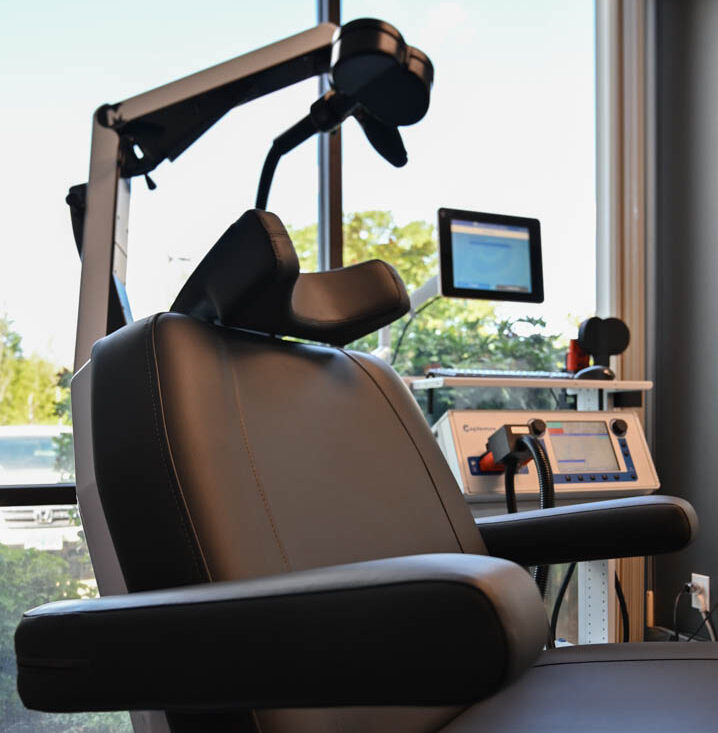
A MagVenture TMS chair at Evolve Health.
Yeah, I came across it online as a new thing, but I’ve struggled with depression my whole life. I always had dysthymia, which is a kind of a chronic low-grade depression, but I definitely had episodes of major depression on top of that.
When I first heard about [TMS], I was definitely in one of those really bad places, and I struggled with substance abuse as well. I had gotten sober and was doing better with my sobriety but was looking to manage my depression in a different way. Most things, like SSRIs, weren’t working over all the years. I tried a few of them. So that’s kind of my story—how I was before.
Yeah, because I’ve tried other alternatives, like acupuncture and, well, a lot of other things. [TMS was] a new thing that was potentially going to be covered by my insurance, which was the best part. It took a while to get it all set up and covered—that took some time.
In the meantime, I was on a different medication that was different from an SSRI. Then, with counseling, everything just came together, and the TMS was a huge part of it too, to move me out of that really bad place. I’m in a really great place now.
The Evolve Health staff was wonderful, very friendly. I would check in with the provider as well after the intake, and she helped get my insurance on board. Once I started, [the appointment] was something like 20 minutes. I kind of meditated during the session. They give you earplugs, and it just became a routine that was no problem for me. I was able to be flexible and found a consistent time that works, because it’s five days a week for many weeks. I never missed a session.
There wasn’t discomfort at all. I never really had any side effects. I may have had one or two headaches that may or may not have been from [TMS]. I didn’t have any other negatives at all.
TMS is well tolerated, with side effects that are usually mild and fade over time. The most common include scalp discomfort, headaches, tingling or muscle twitching, and lightheadedness. Always let your TMS technician know if you feel any discomfort.
Yeah, it kind of opens up the world again when you’re not depressed. My husband definitely [notices], and my family. A big difference is just not being so isolated. I’m more connected to other people, going out more, doing things that I enjoy again, you know? All the things that come along with not feeling depressed. So that’s fantastic.
Again, the ongoing lack of depression is the best part. You know, just being more happy and fulfilled—the way that life is supposed to be, instead of living under a dark cloud. It’s been fantastic. I’m really hopeful that this will last a long time, and I won’t just keep cycling through being depressed.
My sleep is good, I’ve struggled with sleep a lot. My memory is better—better than it used to be. A lot of my memory [issues] that I would notice aren’t a problem. It’s generally pretty good since the TMS, obviously with the mood [improvements], and I’m continuing to be sober. So, all of those things.
Recent research suggests that transcranial magnetic stimulation (TMS) doesn’t just improve mood—it may also enhance memory, focus, and other cognitive skills. A review of 41 studies found that TMS led to significant improvements in cognitive performance across a range of patients.
I think a moment is when my sister said to me, like, “I have my sister back.” Meaning she feels that I am doing so much better, and that was a great moment. That was a big moment to hear that from her.
I did not find it to be unpleasant at all. It’s a commitment, but it was well worth it. It definitely made a difference. I wouldn’t hesitate to recommend it to someone else. The treatment, being able to meditate, and follow my breath was relaxing. Even when [the TMS machine] is kind of loud, you have earplugs. I think all of that made for a fine experience.
It’s really about just being able to commit to the time. [Evolve Health] worked with me to get a time that was consistent that worked with my schedule. Even though I was flexible, that was the best part, because you have to commit to it.
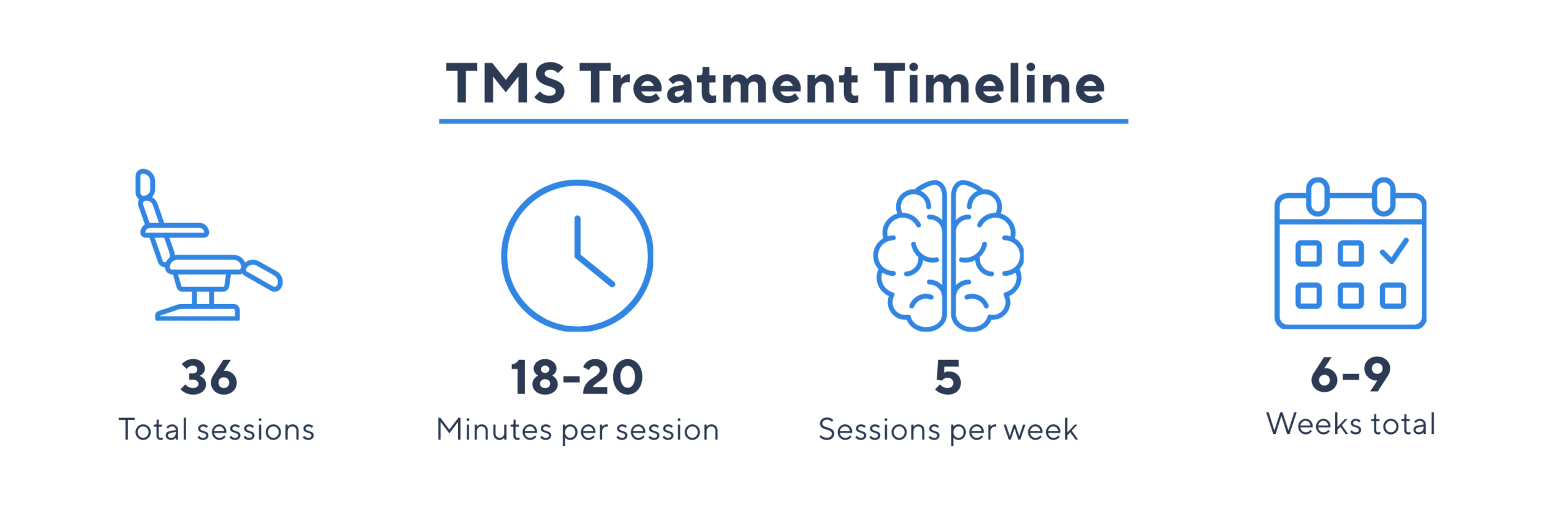
The standard TMS treatment schedule for depression. After each session, patients can drive, work, and go about their day as usual.
I liked the Evolve Health team, from the provider to the technicians that did the treatment. You get to know them, seeing them every day. Everything was just a really good experience, I would recommend it. I think some people who have battled depression for a really long time like I did might feel frustrated, [especially if] medications aren’t working. Having another option like [TMS], it just gives you hope, and I think hope is the biggest thing of all.
Live in Oregon and wondering if TMS, SPRAVATO®, or IV ketamine could help? Reach out to us for a consultation. Our team will connect with you directly to explore your options.